

When Jordan Bonaparte accompanied a family member to the emergency department at the QEII Health Sciences Centre in Halifax on Saturday, he was taken aback to see mice darting through the corridors.
A paramedic quickly reassured him about the situation.
“One of them mentioned that the number of mice here might equal or even surpass the number of patients,” Bonaparte remarked. “My experience in the Infirmary’s emergency room certainly confirmed that.”
After observing mice for nearly six hours in the hallway, he stated that his family member was transferred to a room. Almost immediately, a mouse appeared and began to climb onto the bed where the patient was resting.
“I’m quite certain that if I hadn’t gotten up and stomped my feet, that creature would have made its way right onto my bed, likely in search of the food they were serving her,” he shared.
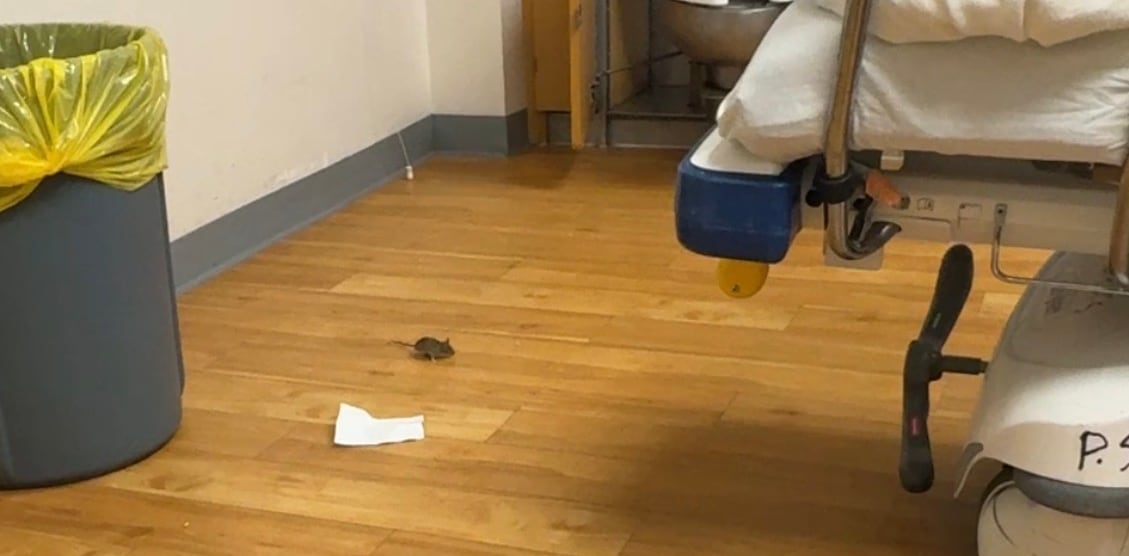
Jordan Bonaparte reported that this mouse was seen running around a family member’s room in the emergency department at the Halifax Infirmary, attempting to access food. (Submitted by Jordan Bonaparte)
Nova Scotia Health has acknowledged that the rodent issue at the QEII complex has exceeded what is typically expected in a port city, where such sightings are commonplace.
Documents obtained by CBC News indicate that pest control expenses for the health authority at both the QEII and Dartmouth General Hospital have surged over the past five years.
At the QEII, which encompasses the Halifax Infirmary, Victoria General, and Rehabilitation sites, the budget for pest control escalated from $35,942 to $323,075, marking an increase of 798 percent.
Dartmouth General experienced the highest percentage growth in the province during the same period, rising from $9,545 to $120,012 last year, which is an increase of 1,157 percent.
“The frequency of these sightings has skyrocketed over the past few years,” noted Chris Smith, the senior director of facilities operations at Nova Scotia Health.
“While it’s easy to attribute it to living in a port city, that doesn’t alter our stance that they have no place in health-care environments, and we must do everything possible to keep them out and ensure these spaces remain clean, sanitary, and safe.”

According to Nova Scotia Health, construction on the acute care tower at the QEII Health Sciences Centre has played a role in the rodent outbreak. (Build Nova Scotia)
Both facilities are surrounded by significant construction activities. Smith acknowledged that the initiation of the QEII expansion project would likely disturb local pest populations.
“We anticipated an uptick, but the scale of the increase has been surprising,” he admitted.
Over the past five years, the health authority has reported capturing 1,435 mice or other rodents within the QEII facilities, which span 2.9 million square feet. Additionally, 321 rodents have been caught at Dartmouth General.
“We’re operating in aging structures, and the environment is complex. There are hundreds, if not thousands, of individuals entering and exiting the buildings daily for medical appointments, supplies, and equipment,” Smith explained.
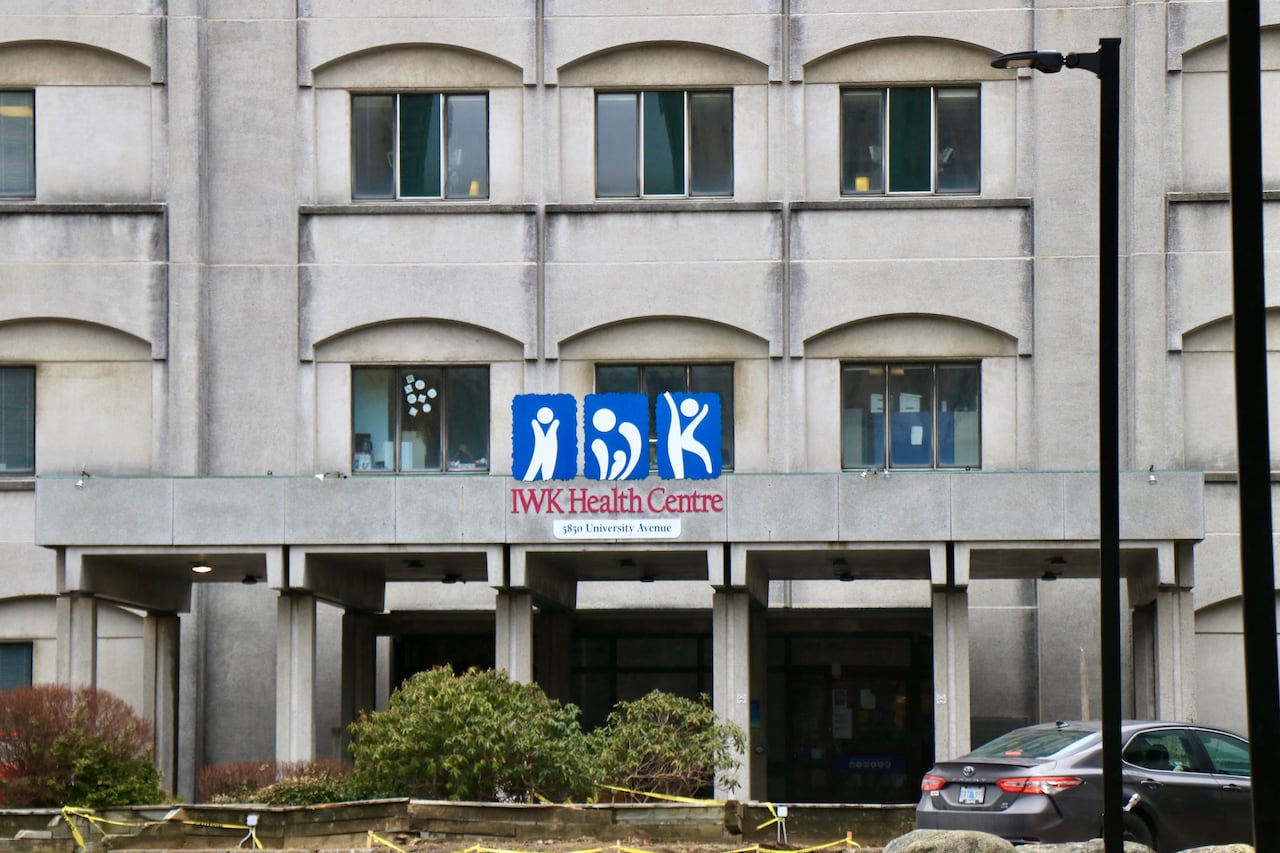
The IWK Health Centre reported needing extensive measures to address a pigeon infestation. (Paul Palmeter/CBC)
In contrast, the IWK Health Centre stated that mice are not their primary concern, despite being adjacent to the QEII.
Last year, the women and children’s hospital incurred $180,000 in expenses after discovering “unusual bird activity,” primarily involving pigeons.
The IWK chose not to participate in an interview, opting instead to issue a statement.
“This included a thorough cleanup of bird droppings and nesting sites, as well as implementing netting and spikes in specific areas to prevent future bird access,” the statement detailed.
The IWK indicated that it anticipates ongoing monitoring of the situation, which will incur some continuing costs.
While the cleanup at the IWK is mostly complete, Nova Scotia Health continues to grapple with its rodent problem.
“This is an issue that has developed over many years. It will likely take several years to fully regain control,” Smith stated.
Smith mentioned that his department has adopted a three-pronged strategy. They have enlisted professional exterminators who visit daily, encouraged staff to report any sightings to target areas for trapping, and initiated external inspections to identify small openings in the buildings.
“Some of these efforts have led to 100 or 200 work orders for all the tiny cracks and crevices that required sealing,” he elaborated.
“If any remain open, we are actively addressing them. This is not an overnight solution.”
Smith is urging staff and patients to remain vigilant and report any rodent sightings.
Days after Bonaparte’s visit to the hospital, he is still disturbed by what he witnessed and is advocating for higher standards in healthcare facilities.
He shared a video documenting his experience on his podcast, The Canadian Gothic. The feedback included numerous comments from individuals stating that such occurrences are normal.
“If your expectations for health care are so low that you consider it acceptable for mice to be roaming the emergency room where individuals are fighting for their lives, then that is an unreasonably low standard to maintain,” he asserted.