

During her Olympic debut at Tokyo 2021, Kate Van Buskirk achieved her second-best time in the women’s 5,000 meters under sweltering conditions of 41°C.
This was an extraordinary accomplishment, and afterward, she fell onto the track to absorb the moment.
Five years later, Van Buskirk describes that moment as the most “egregious” instance of her being photographed, recalling images shared online of her “sprawled out” on the track from highly intrusive angles.
“I just completed the most significant race of my life… I remember looking at those images and thinking, ‘these will be on the Internet forever,’” Van Buskirk remarked, noting there were other photos taken that did not depict her inappropriately.
Such occurrences are unfortunately common in women’s sports.
A study by The Representation Project during the Tokyo 2021 Olympics revealed that female athletes were sexualized nearly ten times more than their male counterparts, despite Olympic broadcasters urging “sport appeal, not sex appeal” to camera crews prior to the events.
“It should focus on performance rather than appearance,” stated Van Buskirk, who has since retired and now serves as a track and field analyst. “Even if it’s unintentional, there should be consideration given to how photographers are positioned to avoid offering just that one perspective.”
For years, the discussion surrounding women’s sports uniforms has sparked debate regarding coverage and fit, especially following the controversy around Nike’s introduction of a high-cut bodysuit for women in the Team USA track and field kit ahead of Paris 2024.
Van Buskirk refers to her track uniform as her “equipment,” choosing to wear bottoms known as “bunners.”
“I aim to wear minimal fabric while still feeling dignified enough to perform seriously as an athlete, without being distracted by concerns over covering my private areas,” she added.

Numerous athletes are voicing their concerns about inappropriate camera angles in women’s athletic events.
Europe advocating for change from broadcasters
In July 2026, the European Broadcasting Union and European Athletics established new guidelines aimed at enhancing coverage in women’s athletics, addressing problematic broadcasting practices that “add zero narrative value.”
The report, Raising The Bar, identified lingering close-ups on specific body parts, low-angle camera placements, and excessive slow-motion replays devoid of storytelling intent as the primary “culprits.”
“The way audiences consume sports today can amplify that impact. A single frame from a live
broadcast can be clipped, zoomed in, and disseminated globally within moments,” explained Elissavet Arapi, women’s sport lead for the European Broadcasting Union.
“Such images can lead to sexualized comments and abusive behavior online, and athletes have expressed growing concern about this.”
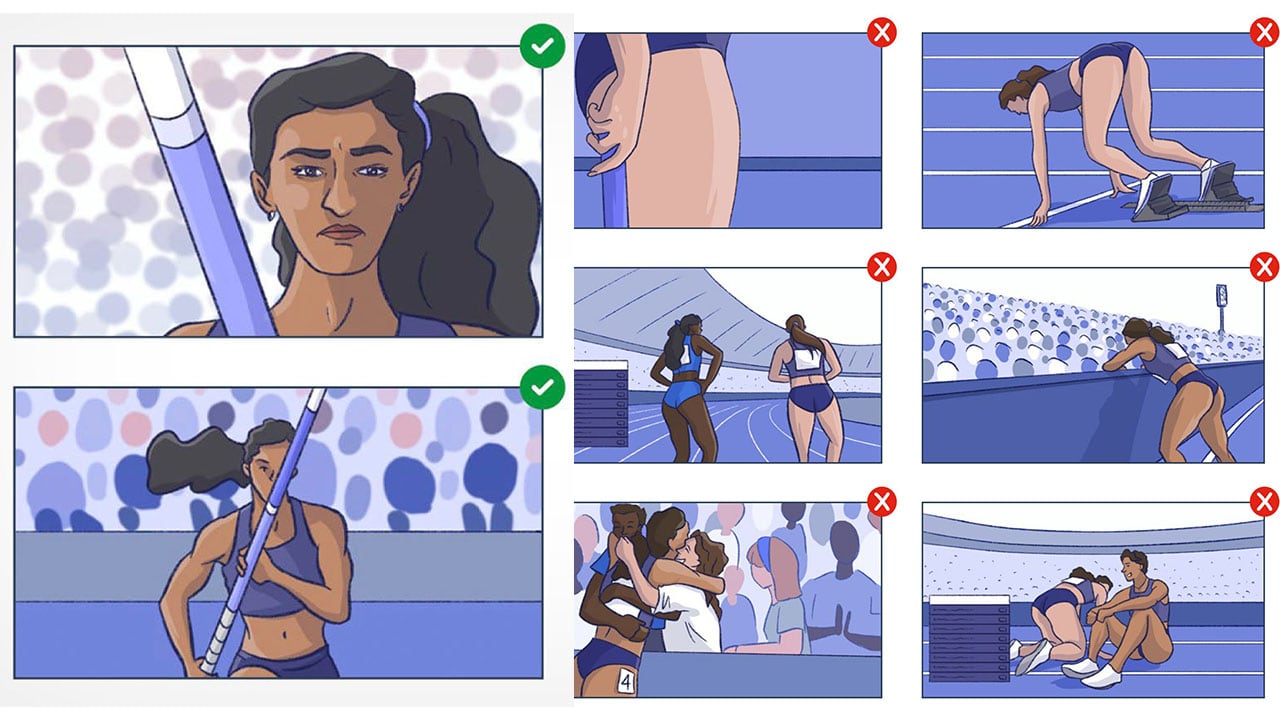
The image above, created by the European Broadcasting Union and European Athletics, illustrates the recommended standard camera angles for covering women’s athletics. (European Broadcasting Union)
Van Buskirk revealed that some of her fellow athletes have found highly sexualized images of themselves captured during competitions on “soft core porn” websites.
“I’ve seen numerous replays over the years featuring myself and others where there’s no commentary… It’s a slow-motion pan starting around the calves and moving up very slowly,” she stated.
Arapi emphasized that addressing editorial choices like these requires collaboration among directors, video operators, and camera crews who must “respond quickly if their shot produces a sexualized image.”
Michele Donnelly, an associate professor of Sports Management at Brock University, quickly highlights the limitations of the guidelines.
“Why can’t this be a policy? The entire document provides a solid rationale for why this is necessary. It should be elevated to a requirement, not merely a guideline,” Donnelly argued. “The IOC (International Olympic Committee) should lead by example and hold itself accountable.”
As Canada’s official broadcaster for the Olympic Games, Paul McDougall, head of production and content at CBC Sports, stated that the organization prioritizes athletic excellence above all else.
“Broadcasters owe women athletes more than just screen time; they owe them broadcasts that honor their strength, skill, and dignity. Visibility fosters participation. By adopting respectful production guidelines, we move beyond representation to ensure athletic excellence remains the primary focus,” McDougall stated.
The Olympic Broadcasting Services (OBS), the permanent host for all Olympic and Paralympic Games, confirmed that they also have guidelines to ensure respectful representation of athletes.
“The respectful and proper portrayal of all athletes across all sports is fundamental to OBS’s coverage of the Olympic Games. This is reflected in the OBS guidelines for venue production teams and is considered throughout our quality control processes when overseeing OBS coverage,” the OBS shared in a statement to CBC Sports.
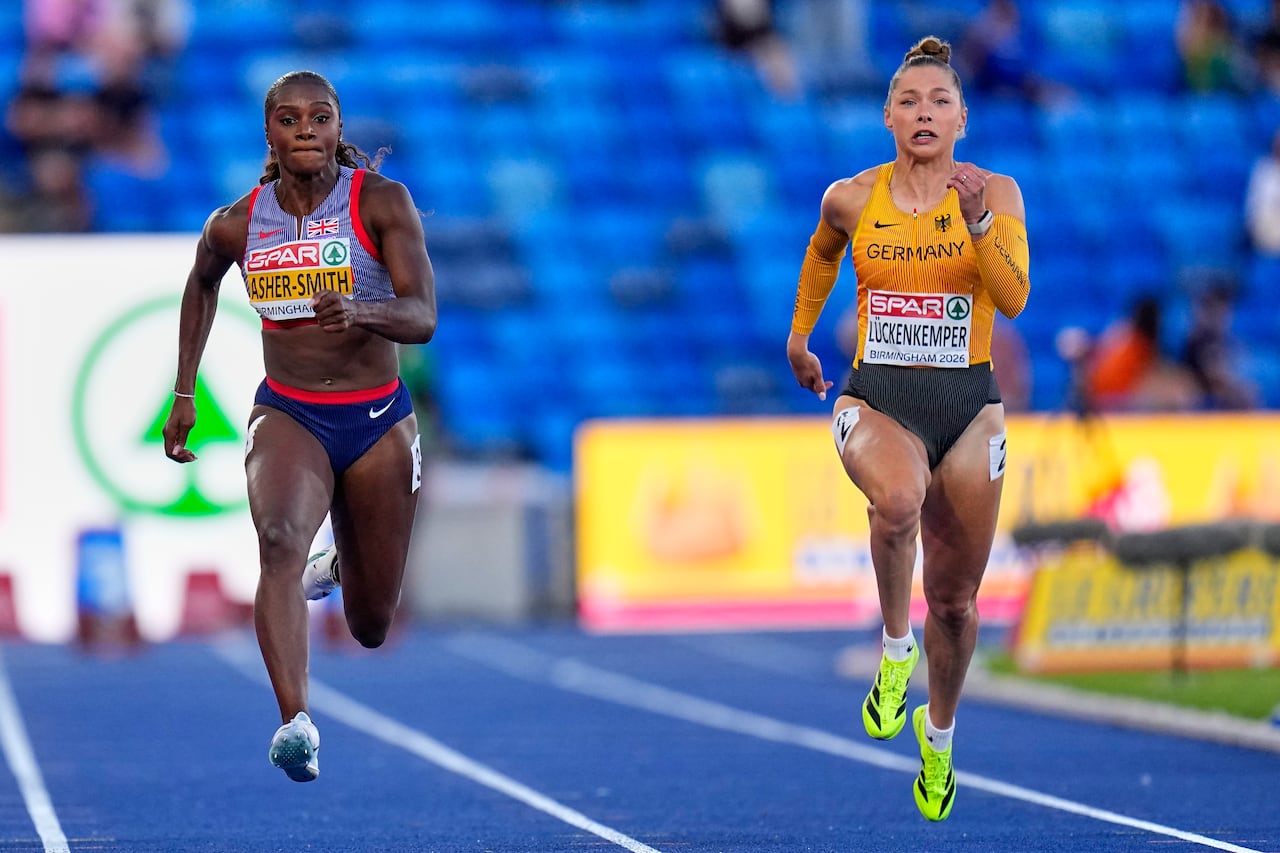
Germany’s Gina Lückenkemper, right, described the upward-facing cameras as intrusive and uncomfortable while in her competition gear. (Petr David Josek/The Associated Press)
Education versus information
In 2019, the World Athletics Organization implemented two small cameras inside the starting blocks for sprint and hurdle events at the world championships in Doha.
While the intention was to offer “trailblazing” views of the runners’ explosive starts, several sprinters strongly criticized the camera positioning. Notably, German athletes Gina Lückenkemper and Tatjana Pinto remarked that the upward-facing cameras felt intrusive and uncomfortable while they were in their competition outfits.
“When your body is exposed… it creates a presumption of access and ownership regarding the use of images of women’s bodies for various purposes. This also affects real-life interactions with athletes and expectations placed upon them,” Donnelly noted.
In light of the backlash, the International Association of Athletics Federations (IAAF) agreed to limit the showing of shots from the block cameras to just at the starting gun and to delete video data at other times throughout each day.
“We have taken note of specific feedback regarding the block cameras and have confirmed that measures are in place to protect athlete privacy when selecting images for broadcast,” the IAAF stated. “We also adhere to strict editorial guidelines for what is broadcast, and these have been in effect since the championships began.”
While sexualization is not exclusive to female athletes, men in sports often celebrate when their bodies are featured on camera, rather than facing threats, according to Donnelly.
“Without undermining the negative impacts that many athletes might experience, male bodies are frequently sexualized in a celebratory manner. Consider the example of high jumper [Anthony Ammirati] from Paris 2024, where the focus was on his masculinity and manhood,” Donnelly mentioned.
On Friday, the top track stars worldwide will compete at the World Athletics Ultimate Championship in Budapest, where fierce rivalries and emerging talents will be on display leading up to LA 2028.
As athletics is one of the most viewed sports during the Summer Olympics, setting broadcasting standards may be more crucial than ever.
“There’s a distinction between informing and educating as opposed to entertaining. Once we shift our focus to entertainment, it can quickly lead to hyper-sexualization,” Van Buskirk remarked.
“That isn’t storytelling; it’s objectification,” Van Buskirk stated.