


In the vast African savannah, elephants are revolutionizing the concept of life after death, as revealed by a recent investigation conducted by an international research team in Kruger National Park, South Africa.
Known as “ecosystem engineers,” these majestic creatures profoundly influence their environment while alive, altering landscapes, water sources, and plant life. The study, led by ecologist Courtney Reed, aimed to determine if the ecological impact of elephant carcasses could persist post-mortem.
Reed explained, “Elephant carcasses are rich in nutrients like carbon, nitrogen, and phosphorus. We sought to understand if these nutrients could continue to play a role in the ecosystem even after the elephants’ demise.”
The study findings were recently published in the Proceedings of the National Academy of Sciences, shedding light on the prolonged effects of decomposition on the surrounding ecosystem.
Sustainable Regeneration Cycle
Through an analysis of soil chemistry and biodiversity around elephant carcasses, researchers discovered that decomposition released significant nutrient reserves into the soil. This process stimulated microbial activity, enhancing plant growth and attracting herbivores to the area long after the carcasses had disintegrated.
The study revealed that the impact of decomposition persisted for over seven years, albeit with an initial phase where the nutrient-rich environment inhibited vegetation growth, creating barren patches or “cold spots” in biodiversity.
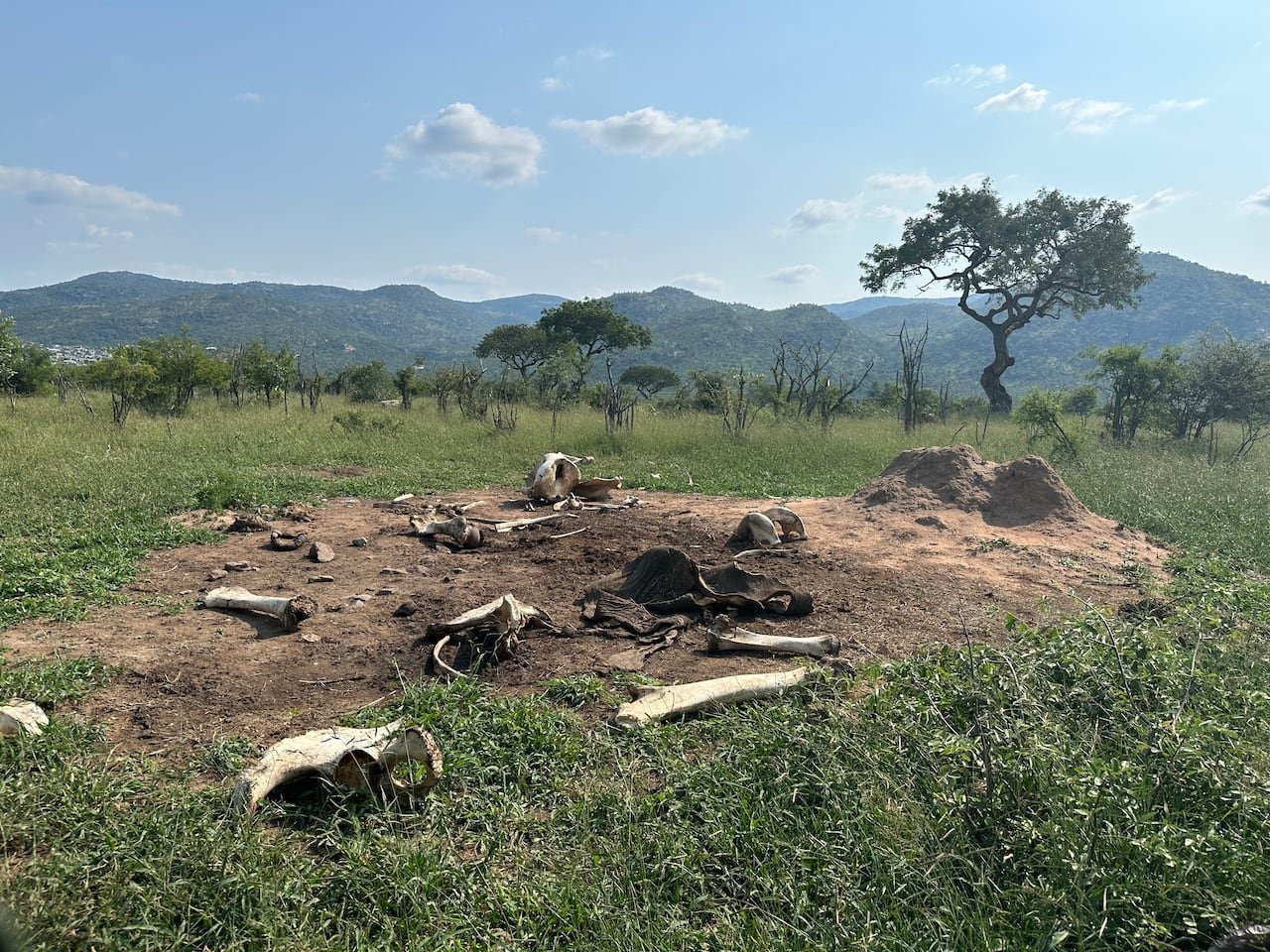
Initial stages of decomposition create barren patches around elephant carcasses due to high nutrient concentrations, impacting local biodiversity. (Submitted by Courtney Reed)
Reed noted, “The sudden influx of nitrogen, particularly in the form of ammonium, can be detrimental to plants. However, as time passes, the ecosystem rebounds