

Prime Minister Mark Carney will present 167 potential investment projects at next week’s investment summit in Toronto, including a floating LNG terminal on British Columbia’s coastline, a high-speed rail connection between Edmonton and Calgary, and a pipeline extending from Alberta to the Pacific Ocean.
These initiatives are detailed in a 66-page “prospectus” acquired by CBC News, offering the clearest insight so far into the investment opportunities that the federal government and Canadian business leaders aim to highlight during the summit.
Scheduled for September 14 and 15, the event will be hosted by the prime minister in collaboration with the Canada Pension Plan Investment Board and the Public Sector Pension Investment Board. It aims to unite affluent international investors with Canadian business leaders to secure $1 trillion in investments.
CBC News previously reported that invitations were sent to some of the largest investment firms and sovereign wealth funds globally, as part of a larger initiative to draw investment during a time of trade disruptions and geopolitical instability.
With tensions rising in the U.S.-Canada trade relationship, the government faces increased pressure to strengthen economic partnerships outside of the United States.
The document categorizes the investment proposals into eight sectors: 11 projects in conventional energy, 31 in clean energy, 63 related to mining and metals, 16 focused on marine and port infrastructure, 11 in power and utilities, 10 in digital technology, 19 in advanced manufacturing, and six in transportation.
Each proposal specifies the project’s current phase, the required capital investment, and the type of funding needed for its development.
Among the most expensive initiatives listed are a $57-billion US expansion of the Port of Churchill; a $44-billion investment in Nova Scotia’s Wind West offshore wind project, spearheaded by the provincial government; the suggested $35-billion West Coast oil pipeline, which would transport oil from Alberta to the coast of B.C.; and the $28.5-billion Ksi Lisims LNG terminal project.
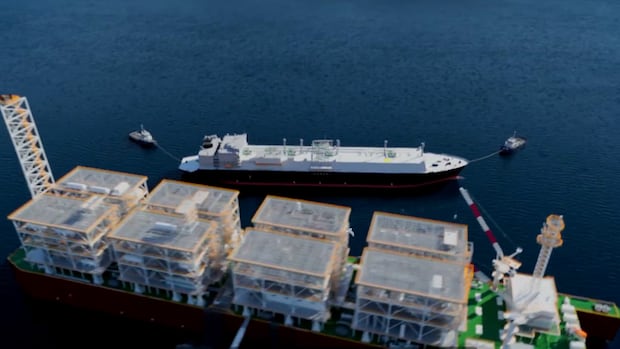
Sources have informed CBC News that the federal government is set to announce a significant agreement to export liquefied natural gas from B.C’s northwest coast to Germany.
Additional projects include a float glass manufacturing facility in Manitoba, enhanced production capabilities for night-vision technology used in defense, and satellite technology for Earth observation, alongside the extensive list of infrastructure developments.
Notably absent from the proposal list is the Alto high-speed rail project, which would link Toronto and Quebec City and has faced opposition due to the land expropriations it would necessitate, as well as any plans for airport privatization, which Carney’s administration has been considering.
Some projects are at more advanced stages than others. For instance, the Ksi Lisims project is labeled as “fully permitted and shovel ready,” while a critical-mineral graphite initiative in Saskatchewan is noted as being in the early phases of economic and environmental evaluation.
The prospectus details plans for a $57-billion US upgrade to the Port of Churchill. Improvements to Canada’s sole deepwater Arctic seaport will encompass a liquefied natural gas (LNG) export corridor, rail enhancements, and other modernization efforts aimed at creating a “four-season trade gateway.”
In Alberta, the prospectus outlines a $10.9-billion initiative for a high-speed passenger rail system connecting Calgary and Edmonton. The document indicates that trains would achieve speeds exceeding 300 kilometers per hour, completing the journey in approximately 90 minutes.
For the oil and gas industry, plans include a $35-billion, 1,250-kilometer-long oil pipeline that would link Alberta crude production with a deepwater export terminal in southern British Columbia.
Additionally, the document presents a $2.1-billion US proposal for the expansion of Calgary-based South Bow’s Prairie Connector pipeline. This plan would involve adding 380 kilometers of new pipeline to transport Canadian crude to U.S. refining markets in the Midwest, utilizing sections of the abandoned Keystone XL pipeline that were previously constructed on the Canadian side of the border.
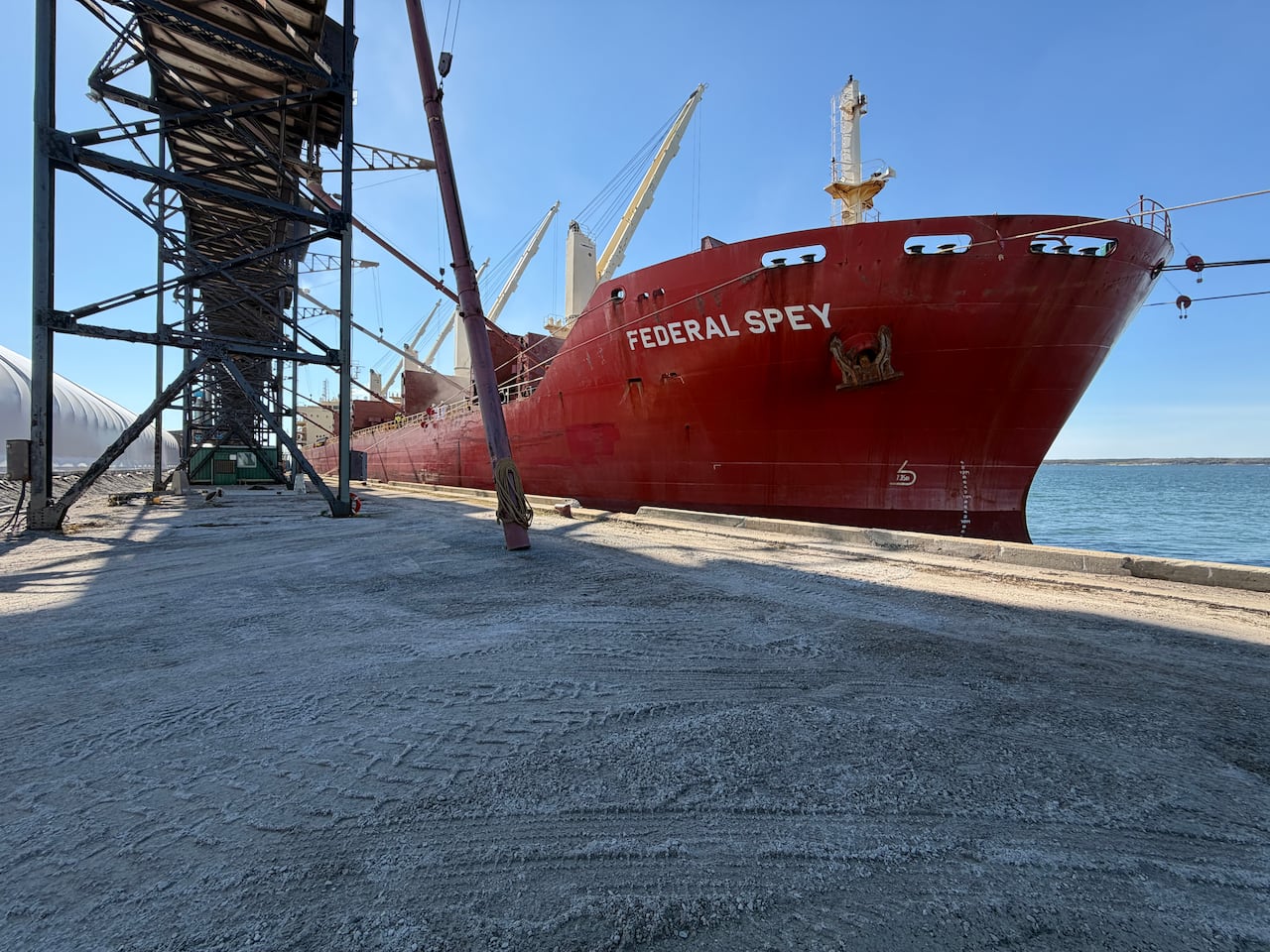
A grain vessel docked at the Port of Churchill on Monday, Aug. 31. The port’s expansion is one of the initiatives featured in the prospectus for the summit. (Josh Crabb/CBC)
Regarding natural gas, the prospectus suggests a $28.5-billion investment in the floating Ksi Lisims LNG export terminal situated on the B.C. coastline. Currently, 99 percent of Canada’s natural gas exports are sent to the United States. Amid ongoing trade tensions, Carney’s government has been working to broaden the range of buyers for Canada’s energy exports.
In the realm of clean energy, the federal government is striving to attract investors by promoting access to “the world’s cleanest and most reliable energy systems.” Proposals include nuclear power generation in New Brunswick, carbon capture initiatives in Saskatchewan, and wind and green hydrogen projects in Newfoundland and Labrador.
Beyond natural resources and infrastructure, the document positions Canada as a leader in artificial intelligence, supported by a national strategy that has been in place since 2017.
Investment prospects in this field feature a $14.5-billion data center near Medicine Hat, Alberta, along with various smaller data center initiatives. The prospectus also invites investors to consider Toronto-based Xanadu Quantum Technologies, which specializes in quantum computers powered by light rather than electricity.