

Last month, a red-shouldered hawk was brought to the Southwest Virginia Wildlife Center after being found unable to move. The staff initially suspected she may have been blinded, injured, or poisoned.
Typically, this agile predator should have been soaring through the skies in pursuit of prey. However, she was discovered lying on her back in a driveway close to Roanoke, Va.
Following a comprehensive examination that included X-rays and blood tests, veterinary personnel eliminated the possibility of injuries or other health concerns causing her inability to move.
Instead, they discovered that the hawk weighed 910 grams — nearly double the average weight for her species.
“The diagnosis for the hawk was simply that she’s overweight,” stated Katherine McGrath, director of operations at the wildlife rescue, during an interview with As It Happens host Nil Kӧksal. “She’s our big lady.”

Filled with Fowl
Once the diagnosis was confirmed, the team began to investigate how the hawk had become so overweight.
“Wild animals usually don’t reach a state where we can clinically categorize them as obese unless they are being fed. We suspected she might have been kept illegally as a pet or a falconry bird,” McGrath explained.
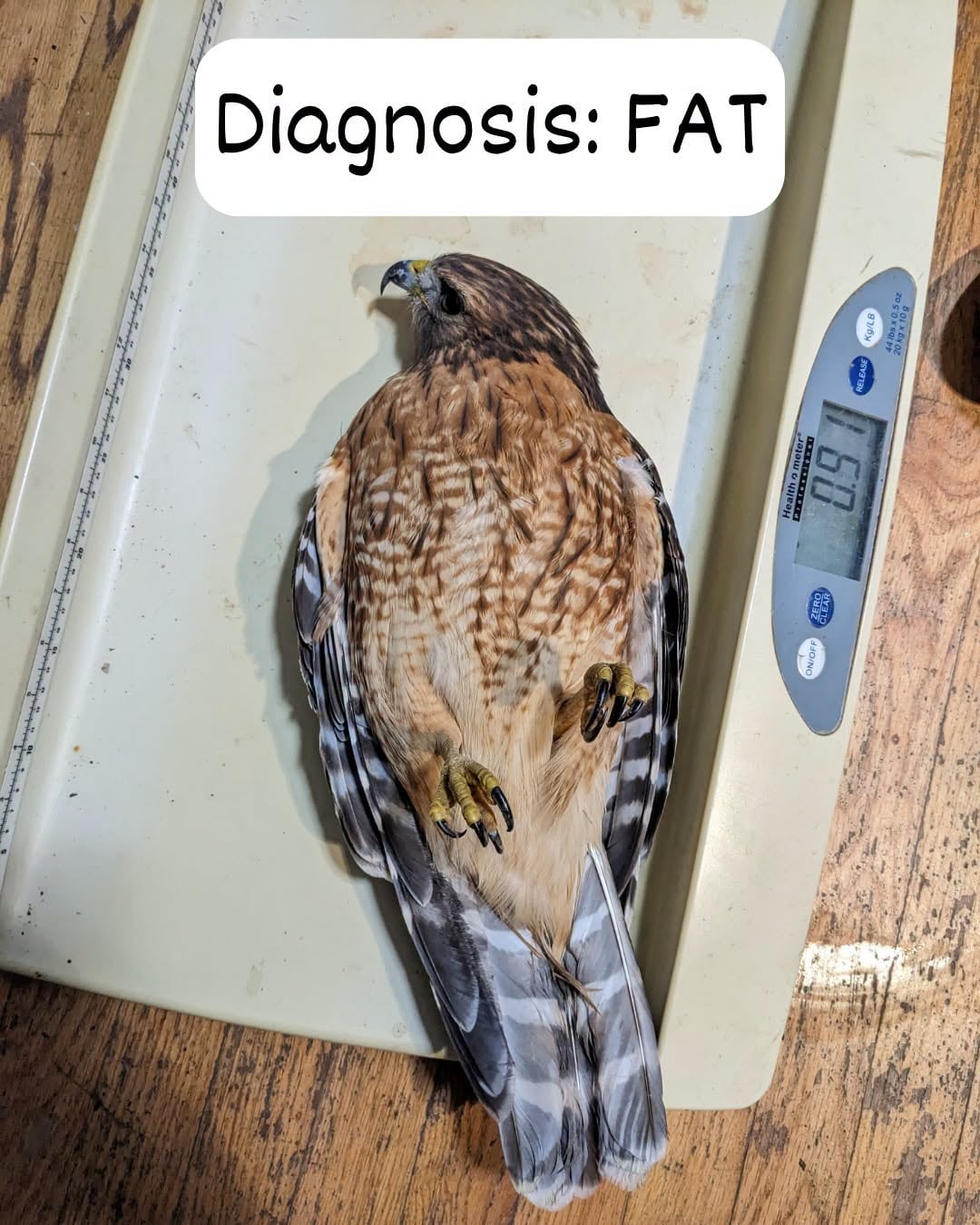
This immobilized hawk weighed 0.91 kilograms, equivalent to 910 grams or about two pounds. Members of her species typically weigh between 500 to 700 grams, according to the Southwest Virginia Wildlife Center. (Southwest Virginia Wildlife Center/Facebook)
They contacted the individuals who found her, but those people were unaware of anyone in the area practicing falconry or keeping wild birds.
“Then we inquired, ‘Do any of your neighbors have free-ranging poultry or chickens?'” she added.
The finders spoke with their neighbors and discovered that several of them had free-ranging chickens, which had been mysteriously disappearing over recent weeks.
“At that point, we thought, ‘Ah, well, we have our suspect,'” McGrath remarked.
‘She’s Healthy and Angry’
According to McGrath, it’s not uncommon for a hawk to consume so much food that it becomes immobile.
Even a hawk at a standard weight can find itself temporarily unable to fly after a large meal, due to the delicate balance required for flight.
Furthermore, she noted that hawks cannot recognize when they have eaten enough. Thus, an unlimited supply of easy prey can lead to overeating.
“Most wild animals will gorge themselves when they have access to a consistent food supply, especially since they must survive winters or periods of scarcity,” McGrath stated.
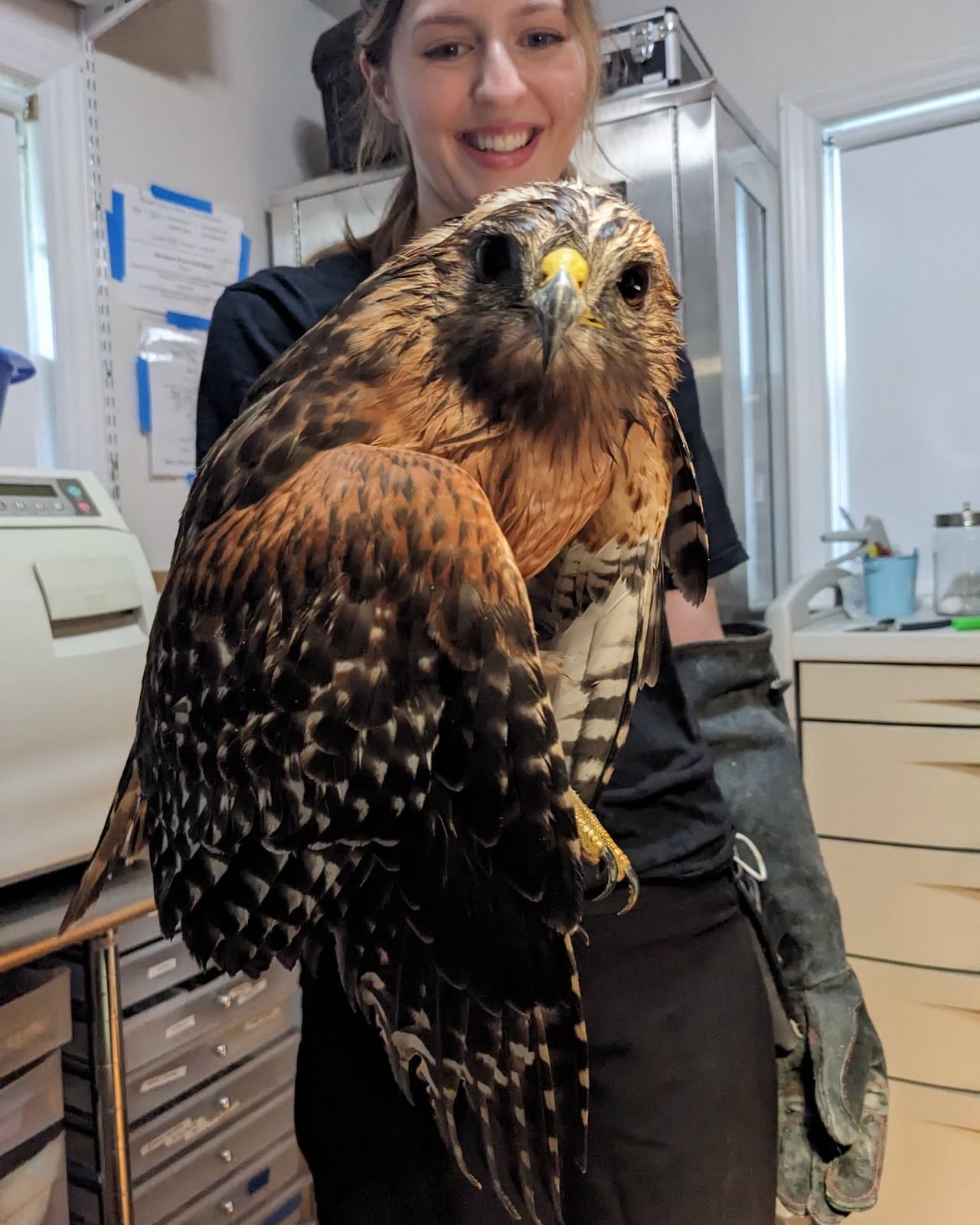
Staff members at the Southwest Virginia Wildlife Center report that this overfed hawk will be ready to take flight again in just a few weeks. (Southwest Virginia Wildlife Center/Facebook)
Despite the circumstances, McGrath assures that their overweight patient is in good condition.
“She is exhibiting all the typical behaviors of a red-shouldered hawk,” she noted.
By normal hawk behaviors, McGrath refers to her wariness of human caregivers and her displeasure at being confined.
“She performs what we refer to as the funny chicken dance, where she flares her wings and attempts to kick at you with her feet, signaling that she wants you to keep your distance,” she explained.
“So aside from her inability to fly, everything about this bird indicates that she is healthy and quite irate, which is exactly what we desire.”
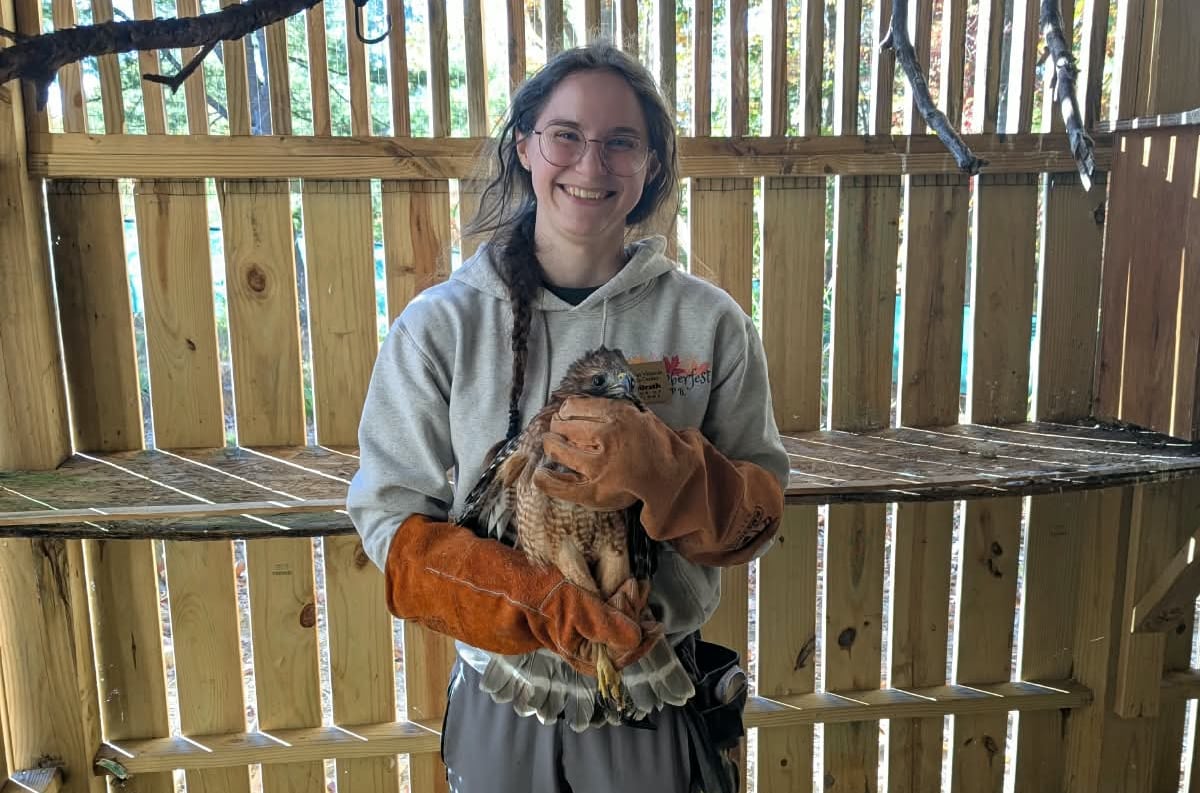
Katherine McGrath from the Southwest Virginia Wildlife Center expresses delight in their ravenous guest. (Submitted by Katherine McGrath)
In the near future, McGrath anticipates that this impressive predator will once again take to the skies.
She is already shedding weight and regaining her ability to move as staff provide her with a controlled, all-natural diet and regular exercise in a secure enclosure. McGrath believes she will be ready for release in a few weeks.
Before her release, McGrath mentioned that the center’s staff will inform nearby residents to raise their awareness and advise them to keep their chickens secured for a while.
“We strive to reduce the chances of her getting into trouble again,” she concluded.